
Bukowski Died Here, Too
Bukowski Died Here, Too
A poem originally published in San Pedro Today, describing my take on San Pedro that was inspired by Romee interviewing me.
It’s a city of sharp contrasts:
the hill, where the better-off live,
blocks the ocean breeze from
the less-off people at the base.
The set up invalidates real estate
beliefs about oceanfront property.
Here, the closer you get to the water
on the port side, the lower the value,
but the closer you get to the port,
the closer to literal wealth.
And scattered through it all
are the turf battles to claim this place
as one thing or another punctuated
by run-ins with the recovered,
recovering,
needing-cover shelterless
who scream for help in everything but words
or just scream because of all the words.
And that contrast is stamped on the DNA
of anybody who stays, from the union-strong
workers with little education making six-figures
and voting for anti-union conservatives,
to the teacher who spreads education
knowing half this place will never care
and that other half, though, that other half
will learn to see the splendor
in the conflicts that mean nothing
compared to the next
paycheck and breath.
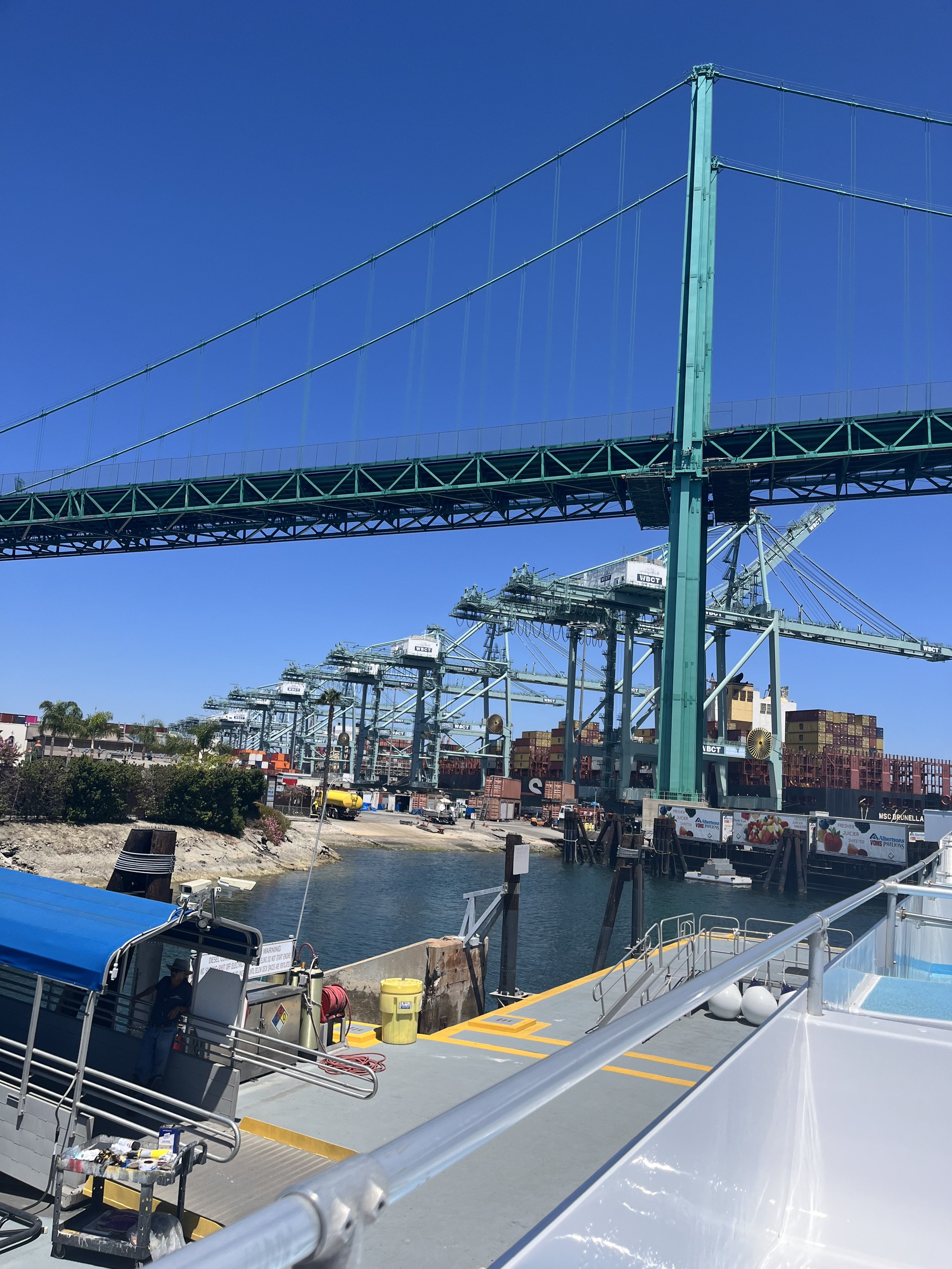
San Pedro Is the Mouth and Wilmington Is the Gut, But L.A. Eats
San Pedro Is the Mouth and Wilmington Is the Gut, But L.A. Eats
a poem about the flow of money in San Pedro
because the electric cattle prod turns anyone into a prolific storyteller
--Eduardo Galeano
Under the prod
and the tongue,
it’s necessary
and hard to create a culture.
Just ask any kid
whose parents
or grandparents
choose colorblindness,
ask any middle-aged
man without a buddy,
ask the sister cities,
San Pedro and Wilmington,
dangling alone together
as Los Angeles’ so-south
they won’t show up
on a tourist’s map
because it’s hard
to keep a miles-long strip
of poorly-policed,
gray-jurisdictioned
road in scale, and
nothing of import
to you is at the end
of that slim highway
meeting the sea.
But that road is the straw and the prod,
soaking up port-wealth from Wilmington as San Pedro,
gaping to let more ships in while both create their own mythologies
and eye-level beefs with each other and never look up or north.
It’s hard to create a culture if you take to heart the words: “Don’t be smart with me” instead of
seeing that the phrase means: don’t get litigious or linguistic; instead, take the prod and hope for
reality, which only occurs on TV in a house rented from the rich, surrounded by
strangers who have nothing to offer but their own broken tongues and makeshift prods.
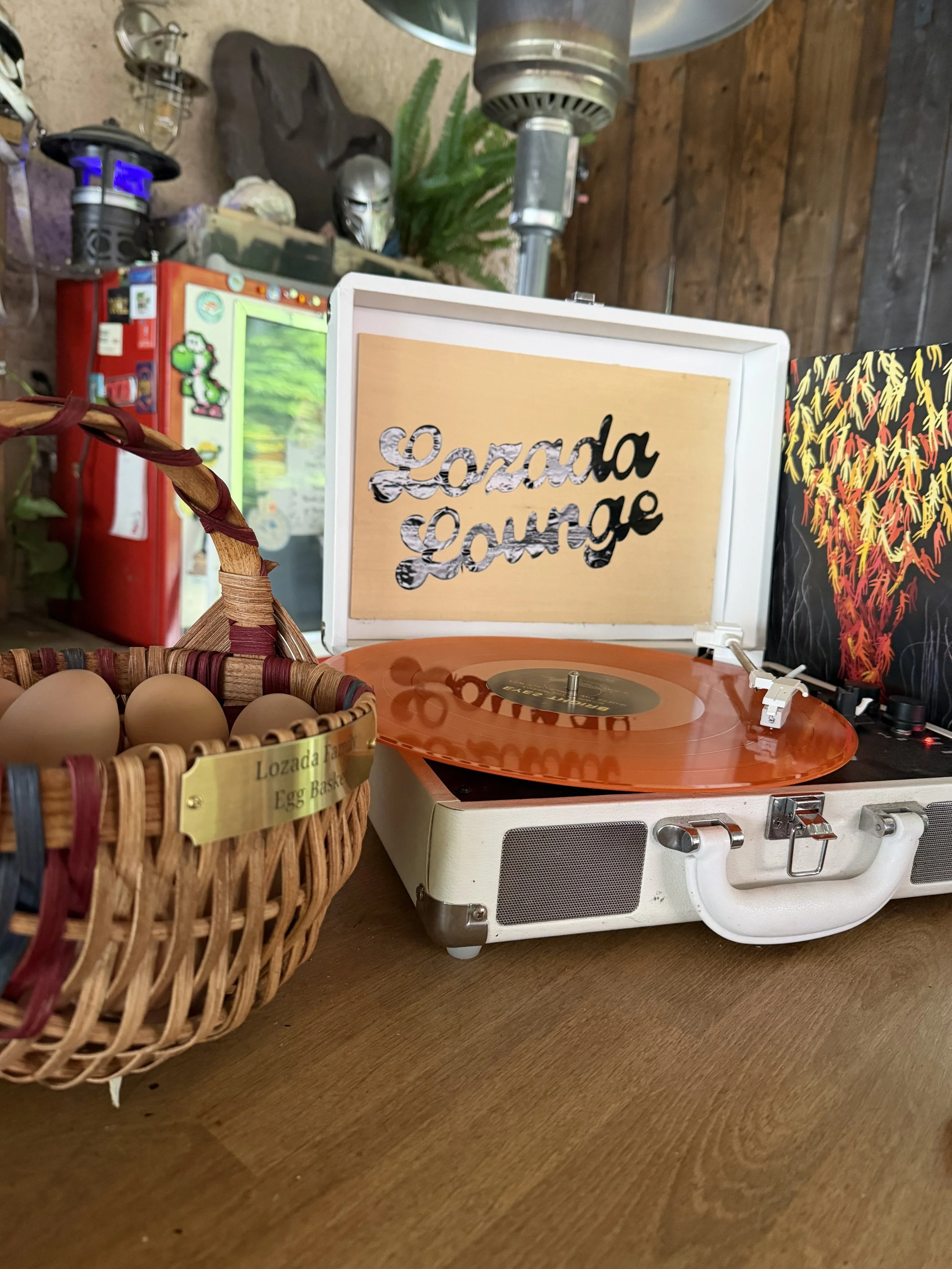
You Pretty Town
“You Pretty Town”
a poem responding to Bukowski’s introduction to San Pedro and Romee’s introduction to Bukowski’s San Pedro. This book was too meta, I feel, to be published, though I thought about it a lot!
“San Pedro I will wring you out like a wet rag”
--Charles Bukowski’s “fear and madness”
My balcony’s structure can’t hold,
but it lasted long enough
for escrow to end before
boards brittled at my weight,
threatening collapse, so a grand
Lion King survey of what is mine
had to wait. What I can see isn’t
as impressive as Hank’s port view,
the Vincent Thomas bridge,
the freeway decorated
in divisionism lights.
My view was more like
John Fante’s Bunker Hill
where my house’s entrance
and garage were street level,
but the building itself sat
on the bank of Bandini Canyon
and Wells Fargo. Everyone is proud
of this 701 square foot accomplishment
while I am worried about structural
integrity and getting enough
classes in the Spring to make
mortgage because Winter
is never promised and rarely
given and teaching in the warm
months depends on population
whims. Hank threatened to break
and flay San Pedro while Fante
conjured the city, this sad flower
in the sand, begging Los Angeles,
give me some of you, while I sit
here, looking at a balcony I owe
that guarantees splintered bones and skin
while I promise I will write
about a darker version
of the port and the bridge
and the freeway and the process,
one that does not affect misogyny
and knives, one that will
probably go
unread.
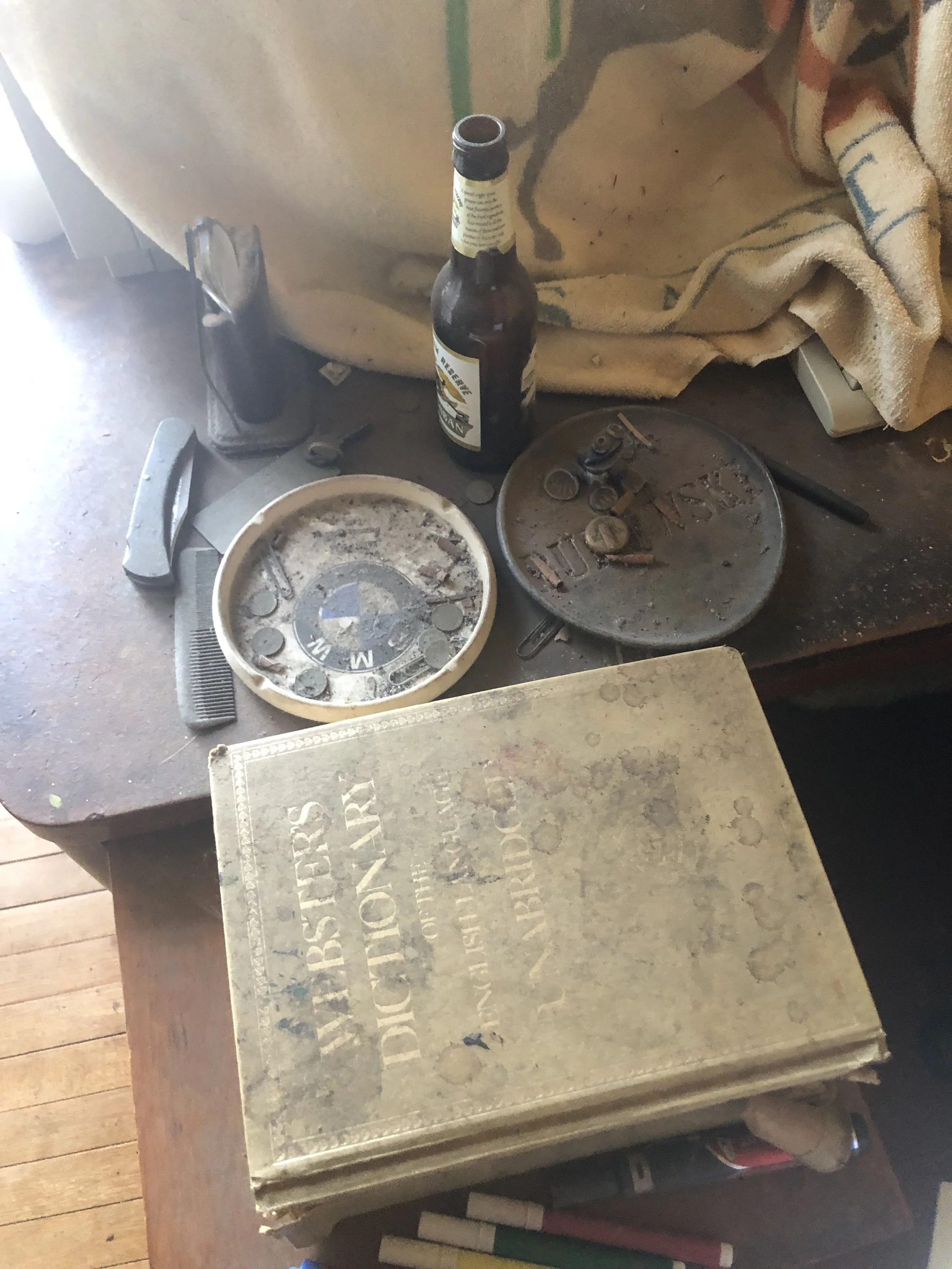
Bukowski’s San Pedro 1
Introduction to Romee’s article highlighting the San Pedro places that appear in Bukowski’s work.
by Angela “Romee” Romero
Originally published in San Pedro Today, July 30, 2020
“I type my first poem here / switchblade in pocket / I type this / for my tax accountant / for the girls in Omaha . . . I am broke again / I own ¼ of this house . . . / everybody is worried about my soul now / I am worried about my soul now”
Charles Bukowski’s decision to move to San Pedro in 1978 was strictly business. He needed both figurative and literal space from his old stomping grounds in Hollywood to get some of his most celebrated work completed. He also needed a tax write-off. And although his house on the hill made him somewhat broke again, at least he had equity and his beloved second-floor sanctuary where he could punch out his prolific prose.
This month, on August 16, we celebrate Charles Bukowski’s 100th birthday. For sixteen of those years, he wrote his heart out in his San Pedro home; books, short stories, movie scripts, and hundreds upon hundreds of poems. Bukowski wrote with an intensity for the brutal and beautiful honesty of life, and it is the legacy of his life’s work that we honor for his centennial. While he didn’t come here to write about San Pedro, the town couldn’t help but sneak its way into his heart and his art.
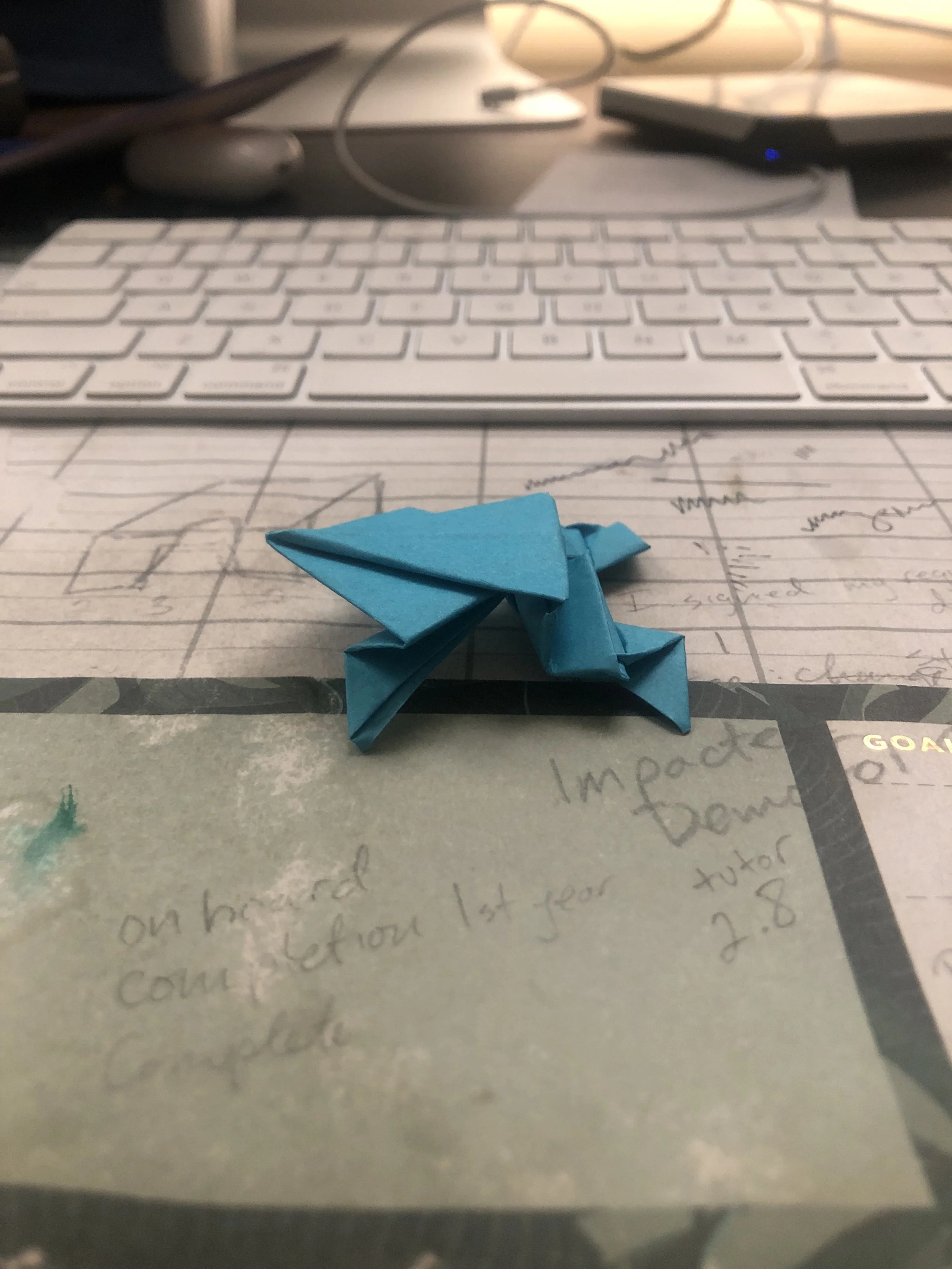
Origami Frog Prayer
“Origami Frog Prayer”
I attempted to fold 1,000 origami frogs for Romee. She told me that “Love Song of Reynaldo” had significance.
After “Love Song of Reynaldo” by Abe Lyman
Where do you come from, Christian?
I come from San Pedro.
I don’t think about you all the time,
but I hope you beat cancer
And where do you live in San Pedro?
I live in a house by the bay.
I don’t think about you all the time,
but I hope you beat cancer
Si, si, Padre. I live in a house by the bay
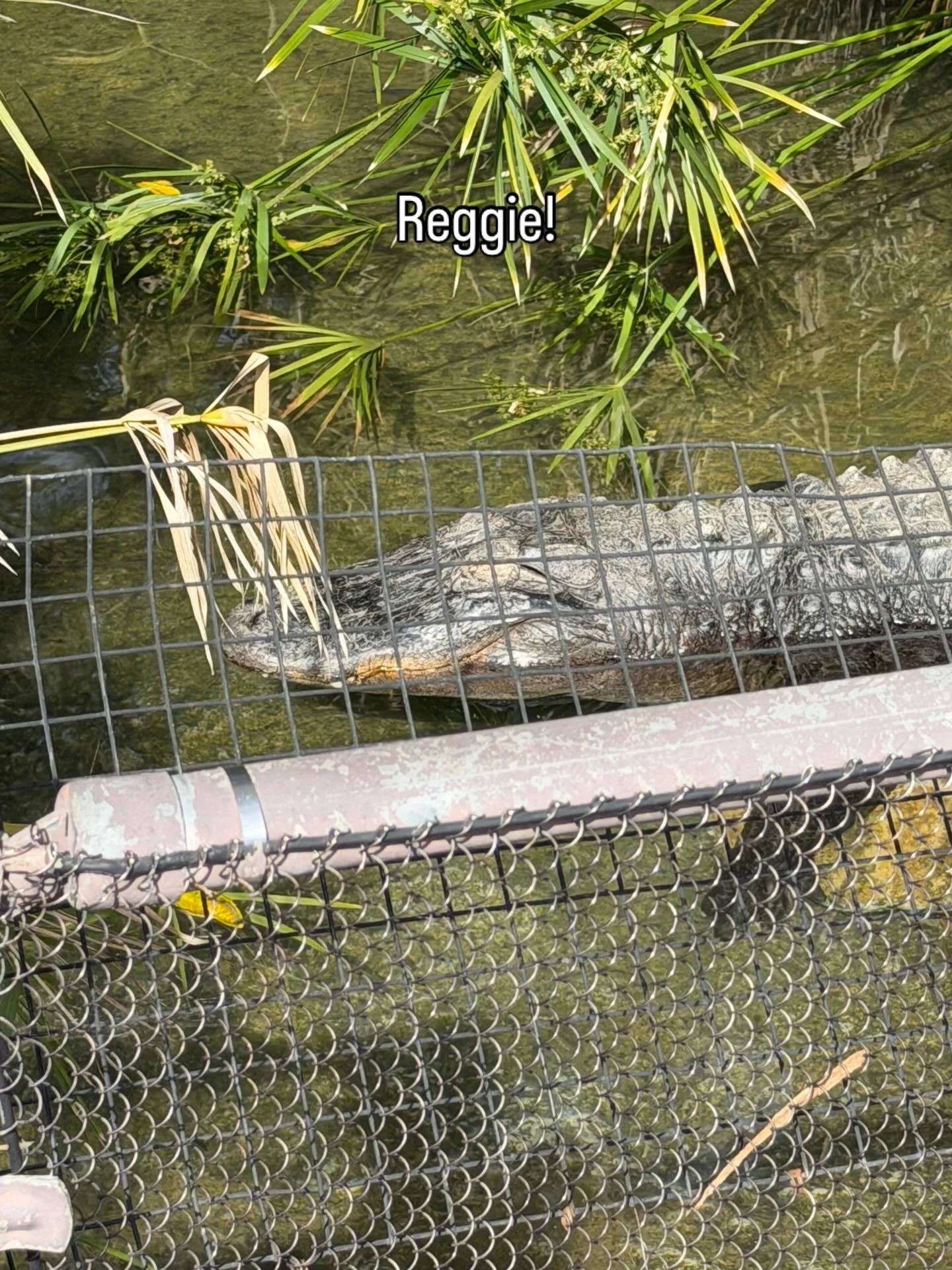
Bukowski in Bronze
“Bukowski in Bronze,” part of the collection Not a Bukowski Statue by Angela Romero and Christian Hanz Lozada
“we need our own newspaper”
–Charles Bukwoski’s “the weather’s been fair”
When my sister started her campaign
to build a statue of Hank for the locals
to know their neighbor was a writer
and tourists to have something to look at
besides his headstone--lying flat like
all the dead, to be towered over
by a single traffic cone--the closest thing
to a Pedro paper said don’t sanitize him
for tourist consumption; instead, pimp out
his image like they do with t-shirts
and posters even though he was uneasy
about his face, and his widow
doesn’t see a damn penny.
When my sister started her campaign,
she wasn’t a fan of Hank, but cried
cancer-filled tears at the request for miles
in exchange for inches. She wanted the one
statue and was countered with a list of
should-be statues and parks and museums
and how-to-go-about-its with stickers
and shirts the widow and Hank wouldn’t
approve of, and you need approval from
the sideshow act to make a couple pennies
off their alligator-face. Drive down Pacific,
past Slavko’s giant chicken and see the local
paper posterize Hank on their storefront
window, bigger than his life and with a factoid
impossible to prove but for one posed picture.
When my sister died, Bukowski in Bronze
probably went with her because Pedro wanted
an army of statues and for one radiation-weak
woman to read, remember, and build them
without hosing them down to see how memory
is like property already staked, claimed, gated.
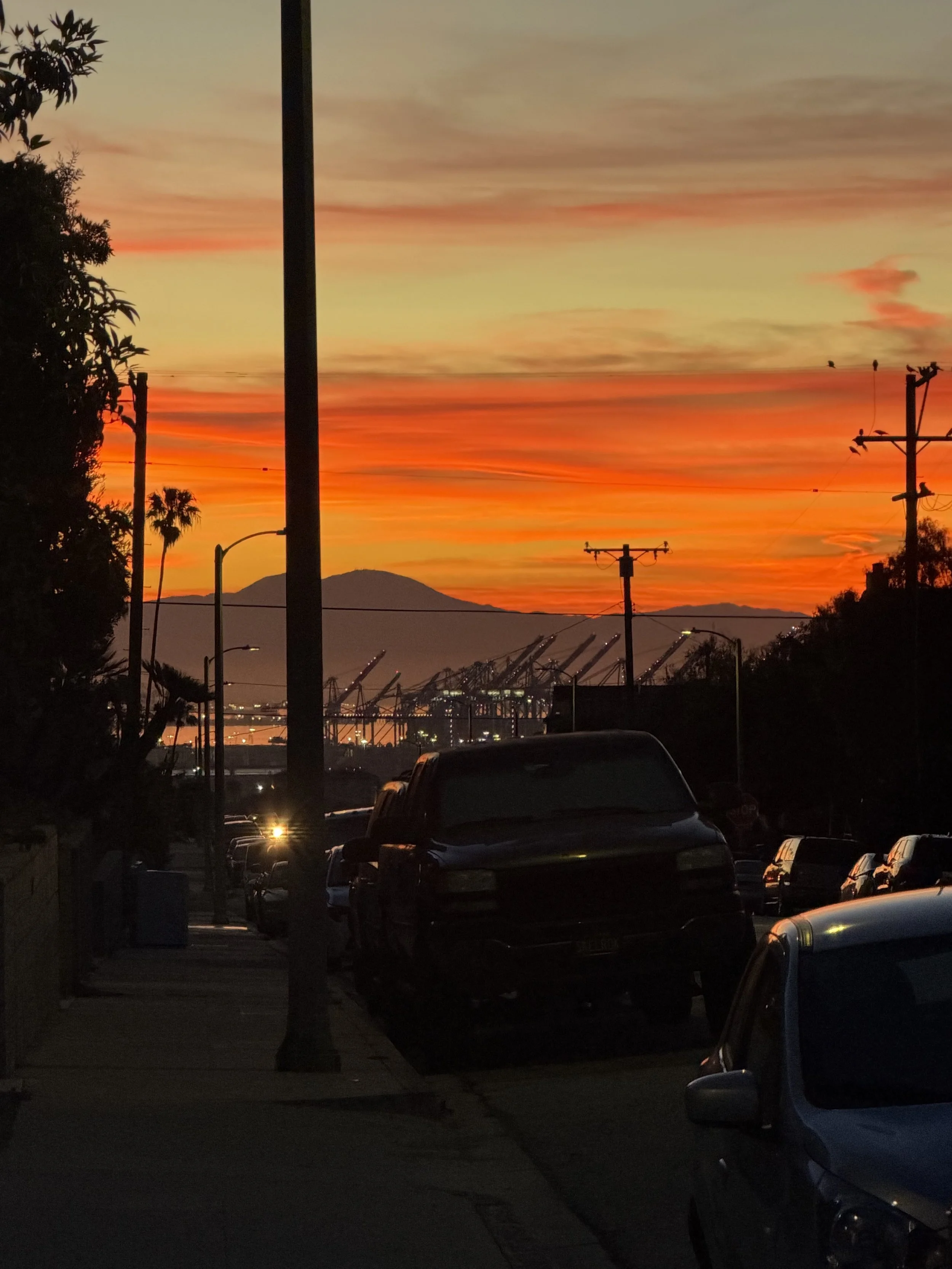
Why Bukowski Matters to San Pedro
“Why Bukowski Matters to San Pedro” by Angela Romero (originally published in San Pedro Today)
The famous writer brought our port town to the world, a bronze statue is well-deserved.
February 27, 2020
Growing up, I always wondered how a lot of adults could be so clueless about celebrities that I couldn’t know enough information about. Would I ever be that clueless? Yes. It’s happening right now. I don’t know who anyone is.
It’s okay that I don’t know who the hottest TikTok or YouTube stars are. But if any of them were from San Pedro, you better believe I would make it my business to know who they were and what they did. It is literally my job to know it. Part of the mission of the San Pedro Heritage Museum is to celebrate the contributions that San Pedro residents have made to local, national, and global history.
Our first major attempt to fulfill this part of our mission is to dedicate a bronze statue to Charles Bukowski, the world-famous writer who has an impressive body of work that includes novels, short stories, screenplays, and thousands of poems. It was an extremely ambitious first step out of the gate for a fledgling organization, but Bukowski’s cult icon status made the effort seem less daunting. Bukowski’s work elicits strong feelings among its readers and so many fans feel it speaks to them in a very personal way.
Bukowski’s worthiness for a statue was not an issue any of the committee members thought we would have to address. We’re not making a statue for German tourists. We’re marking the spot where inspiration and genius met to create prose and poetry that will resonate with laughing hearts long after all of us are gone. Bukowski’s contribution to San Pedro might not be something tangible beyond the seekers who come here to feel close to him, but he has inserted San Pedro into millions of imaginations around the world simply by writing about his life here.
In his poem “Fear and Madness,” Bukowski proclaims his intention to get to the heart of his new adopted hometown:
San Pedro I will wring you out like a wet rag
San Pedro I will break you like a wild stallion
I will write about your bridge and your ships
I will skin your people down to the bone
I will make my stand here as I have made my stand elsewhere
I will learn these walls
Charles Bukowski brought San Pedro to the world through his poetry. All we want to do is honor that gift of art with a fitting work of our own that we can share with the world.
We don’t have to erect a statue to get Bukowski fans to come to San Pedro; they already come here looking for some sign of their hero. The statue is for San Pedrans to start seeing their worth. There is so much to celebrate about San Pedro, things that we take for granted or shrug our shoulders about until someone from out of town tells us it’s worthy of celebration. The museum is absolutely set on changing that. Going forward, it’s totally fine if Bukowski isn’t your cup of tea, but it will be the museum’s job to educate San Pedrans about him, his work, and ultimate contribution to the community. The statue is just the beginning.
Famous San Pedrans like Charles Bukowski, Misty Copeland, Robert Towne and Mike Watt make my job as a historian easy. Their work and fame won’t let them be forgotten any time soon, and San Pedro will always have its place in their legend. I’m more concerned about the great San Pedrans who are being forgotten as we lose the older generations who knew them best and felt their impact on the community the most. If the San Pedro Heritage Museum has the chance to be successful, no one will ever forget local icons like The Sepulveda family, Martin J. Bogdanovich, and John Olguin.
Big changes are on the horizon. Long-time Pedro families are capitalizing on the housing market and leaving town for more affordable communities, while home buyers from out of town are flocking to San Pedro because their money goes further here than anywhere else in L.A. Meanwhile, we’re losing that cohesive generation that connects us to this land and the memory of those great San Pedrans who made this town such a wonderful place to live. If we don’t start getting our history out there to younger generations and new San Pedrans, it will continue to die with those people.
I’m not afraid of all the new faces coming to town. Every one of them represents an opportunity for me to share our history and to invite them to adopt it as their own. When people feel connected to their community, they get involved. Luckily, there are enough great stories here for them to connect to. Will it be telling them about Martin J. Bogdanovich and StarKist, so they feel the history in every bite the next time they have a tuna sandwich? We’ve got military history, labor history, famous musicians, athletes and artists. Who knows, maybe it’ll be a poem at the Charles Bukowski statue.
The San Pedro Heritage Museum exists because there is a need to actively get our history out into the public. We can’t afford to be passive collectors anymore.
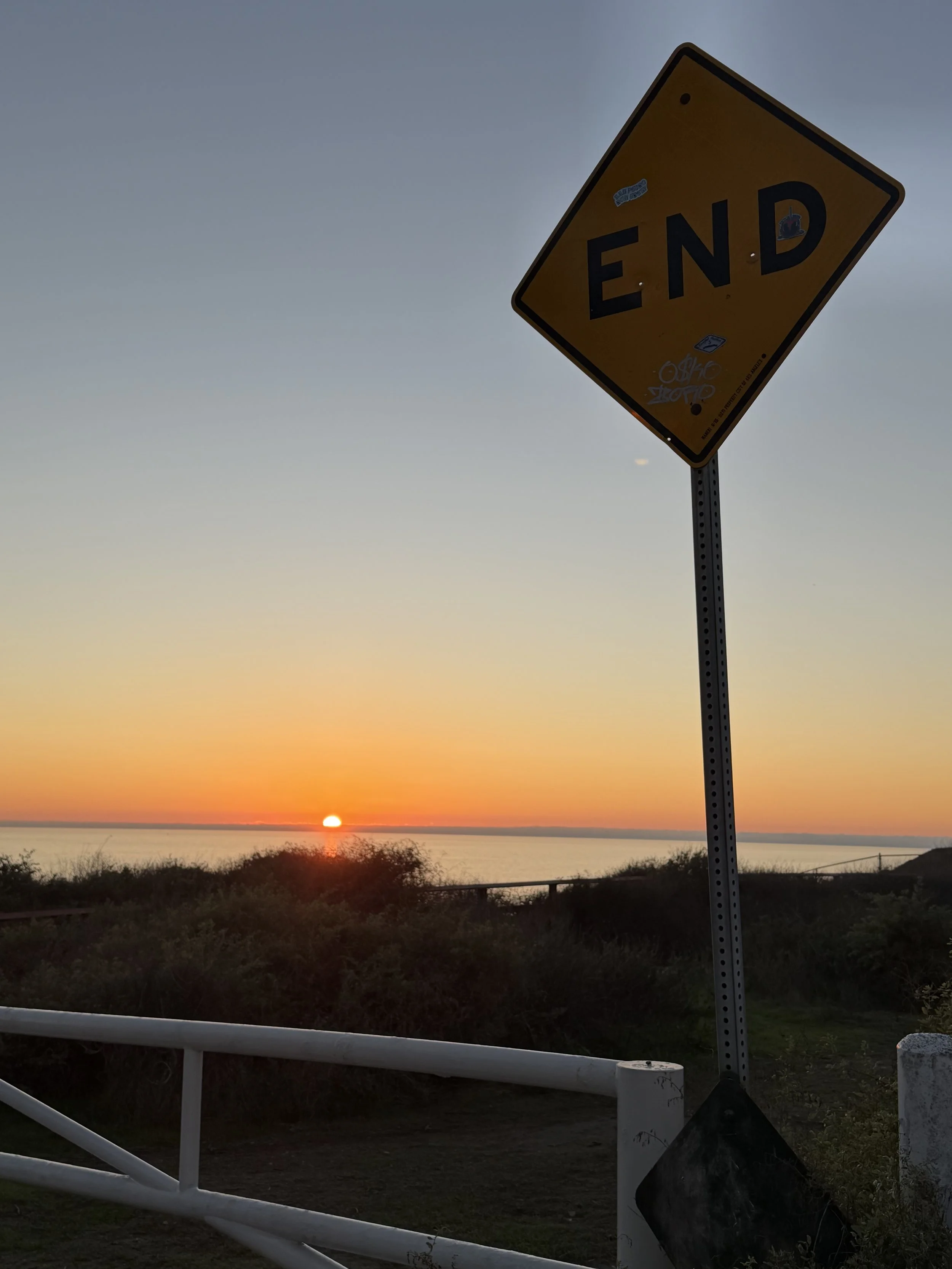
Not a Bukowski Statue
It All Begins Here
Introduction
The Little, Three Hearted Town/Cataloging the Unfinished
One partner in my beginnings without end is my best friend and hanai sister Angela “Romee” Romero, founder of the San Pedro Heritage Museum, who’d love my excitement and research ways to make it possible. She was there shortly after I started my bookstore and looked for spaces to rent when I wanted it to grow, she hosted my writing workshop and attended my poetry readings, she got me into Charles Bukowski’s house and introduced me to his wife, Linda, she dropped my poetry in her San Pedro Today column, and brought me whiskey. She knew the more improbable the beginning the more my mind would catch fire, like writing a city memoir of San Pedro that was both historic and reflective to match the complexity of a city that isn’t a city or like trying to build a statue in the face of a pandemic and multiple uprisings to a person we were “meh” about.
Romee and I were going to contextualize Bukowski’s version of San Pedro by highlighting references to this city in his poems, sharing snippets of the history of those places as he knew them, and reflect on how they have changed. That structure is still here, only where the history of Hank’s San Pedro would have been more robust, my response, as a person of color born the year Hank moved to Pedro, takes up more space.
This book is a map circumnavigating the boundaries of San Pedro defined by the three of us, Romee, Bukowski, and me. It starts with the freeway and the bridge where they spit Hank out from the race track and where my first Pedro home sits, along the waterfront and downtown where he ate and shopped, to Beacon Street where his P.O. Box was with its view of the port, up to Vista Del Oro and the hospital where I live, Romee stayed, and where he died, to his neighborhood, Holy Trinity, where he and Romee lived (my first house is there, too), and ending in Green Hills Cemetery.